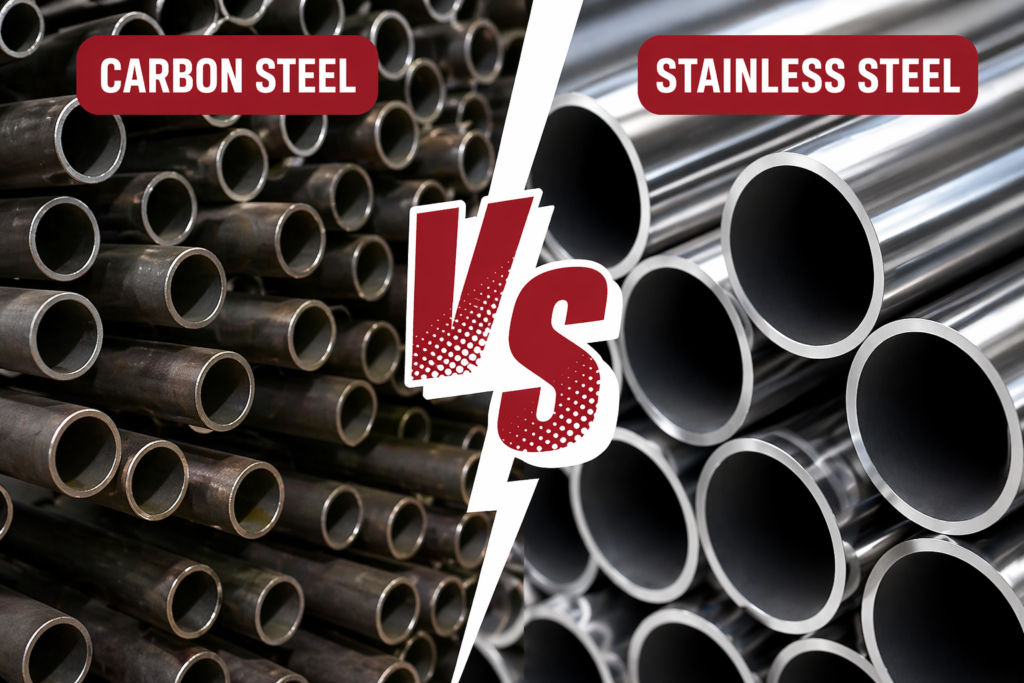
In industrial procurement, selecting the right piping material is more than a technical choice—it is a strategic decision that impacts cost, durability, safety, and long-term performance. The comparison of stainless steel vs carbon steel pipe is one of the most critical evaluations engineers face when planning infrastructure, oil & gas, or manufacturing projects.
Just as modern systems rely on strong foundations, piping systems depend on the right material to ensure reliability and efficiency. From corrosion resistance to lifecycle cost, this guide provides a functional overview of how these materials differ and how to choose the right one for your application.
Understanding the Material Landscape: Stainless Steel vs Carbon Steel
Before making a procurement decision, it’s essential to understand how these materials function at a foundational level.
Stainless Steel Pipes
Stainless steel pipes are alloy-based and contain chromium, which forms a protective layer against corrosion.
Carbon Steel Pipes
Carbon steel pipes are composed mainly of iron and carbon, offering strength and affordability but limited corrosion resistance.
Core Functional Difference
- Stainless steel focuses on corrosion resistance and longevity
- Carbon steel focuses on strength and cost efficiency
The Structural Foundation: Composition and Properties
Just like data platforms rely on structured architecture, pipe performance depends on material composition.
Stainless Steel Composition
- Chromium (corrosion resistance)
- Nickel (strength and flexibility)
Carbon Steel Composition
- Iron + Carbon (strength and hardness)
Key Takeaway
Material composition directly influences durability, maintenance, and application suitability.
The Performance Layer: Key Differences Explained
1. Corrosion Resistance
- Stainless steel resists rust naturally
- Carbon steel requires coatings
Best for harsh environments: Stainless Steel
2. Strength and Load Capacity
- Carbon steel has higher tensile strength
- Stainless steel offers flexibility
Best for heavy-duty use: Carbon Steel
3. Cost Efficiency
- Stainless steel has higher upfront cost
- Carbon steel is budget-friendly
4. Maintenance Needs
- Stainless steel requires minimal upkeep
- Carbon steel needs regular protection
5. Temperature Performance
- Stainless steel handles extreme temperatures better
- Carbon steel performs well but may degrade in corrosive heat
6. Fabrication and Welding
- Carbon steel is easier to fabricate
- Stainless steel requires expertise
7. Surface Finish
- Stainless steel is smooth and polished
- Carbon steel is rough unless coated
8. Lifecycle Cost
- Stainless steel = higher initial, lower long-term cost
- Carbon steel = lower initial, higher maintenance cost
9. Application Scope
- Stainless steel: food, pharma, marine
- Carbon steel: oil & gas, construction
The Application Layer: Where Each Material Works Best
Stainless Steel Use Cases
- Chemical processing plant
- Marine environments
- Food and beverage systems
- Clean water pipelines
Why It Works
Provides corrosion resistance and hygiene, critical for sensitive industries.
Carbon Steel Use Cases
- Oil and gas pipelines
- Structural frameworks
- High-pressure systems
- Underground infrastructure
Why It Works
Delivers strength and cost efficiency, ideal for large-scale operations.
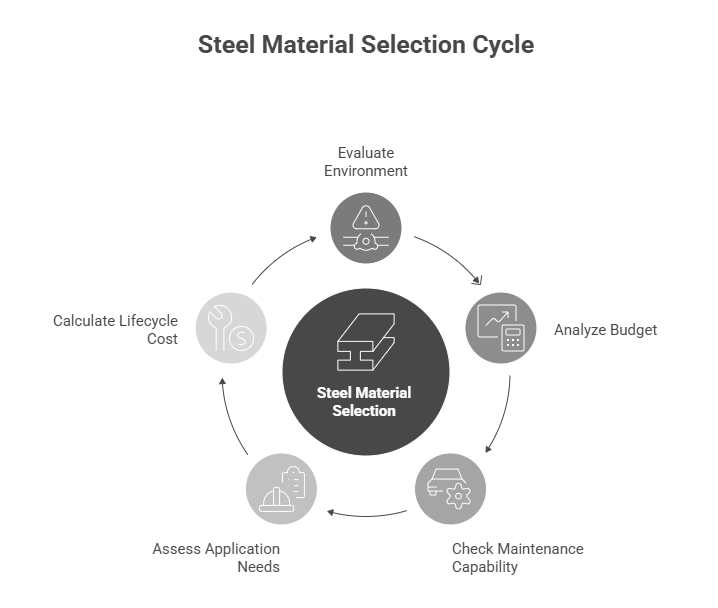
The Decision Pipeline: From Requirement to Selection
Just like a data pipeline transforms raw data into insights, procurement follows a structured decision process.
Step-by-Step Framework
Evaluate Environment
Corrosiv → Stainless steel
Non-corrosive → Carbon steelAnalyze Budget
Limited → Carbon steel
Long-term ROI → Stainless steelCheck Maintenance Capability
Low maintenance → Stainless steel
Regular upkeep → Carbon steelAssess Application Needs
Hygienic → Stainless steel
Structural → Carbon steelCalculate Lifecycle Cost
Consider maintenance, replacement, and downtime
From Material to Performance: Real-World Scenarios
Scenario-Based Comparison
- Chemical Industry
- Requirement: Corrosion resistance
- Solution: Stainless Steel
- Oil Pipeline Project
- Requirement: Strength + affordability
- Solution: Carbon Steel
People Also Ask
Which pipe material lasts longer?
Stainless steel pipes generally last longer due to their corrosion resistance and low maintenance needs.
Is carbon steel more cost-effective?
Yes, carbon steel is cheaper initially, making it suitable for large-scale industrial projects.
Can stainless steel corrode?
It is highly resistant but may corrode under extreme conditions such as chloride exposure.
Which pipe is better for water systems?
Stainless steel is preferred due to its hygienic and non-reactive properties.
Why is carbon steel widely used in pipelines?
Because it offers high strength and cost efficiency in demanding environments.
The Business Perspective: Cost vs Performance
Key Considerations
- Initial investment vs long-term savings
- Maintenance frequency
- Risk of failure or downtime
- Environmental exposure
Insight
- Short-term projects → Carbon steel
- Long-term, critical systems → Stainless steel
The Future of Material Selection
With increasing focus on sustainability, efficiency, and lifecycle optimization, procurement strategies are evolving.
Modern projects prioritize:
- Long-lasting materials
- Reduced maintenance costs
- Higher operational efficiency
This shift is making stainless steel more relevant in high-value applications, while carbon steel remains dominant in cost-sensitive industries.
Related Reports
Conclusion
The choice between stainless steel vs carbon steel pipe is not about which material is better—it’s about which material is right for your specific application.
Final Takeaways
- Stainless steel excels in corrosion resistance and durability
- Carbon steel leads in strength and affordability
- Lifecycle cost is more important than initial price
Procurement Insight
A well-informed decision ensures reduced downtime, improved safety, and better return on investment. Engineers who align material selection with project requirements will consistently deliver more efficient and reliable systems.