Inconel pipe is a high-performance alloy pipe widely used in extreme environments, especially in the oil and gas industry. If you’re exploring what is Inconel pipe and why it’s used in oil & gas, this guide will help you understand its properties, grades, and applications. To explore technical standards, you can refer to https://metallonpipings.ae/ (official source for Inconel alloys).
What Is Inconel Pipe?
Inconel pipe is made from nickel-based superalloys, designed to withstand extreme temperatures, pressure, and corrosion.
Key Characteristics of Inconel Pipes
- High resistance to oxidation and corrosion
- Excellent strength at elevated temperatures
- Superior mechanical properties
- Long service life in harsh environments
Why It Stands Out
Unlike stainless steel, Inconel maintains its strength even under extreme heat and pressure, making it ideal for critical industrial applications.
Composition of Inconel Pipe
Main Elements
Inconel alloys typically include:
- Nickel (primary component)
- Chromium
- Iron
- Molybdenum
- Niobium
How Composition Impacts Performance
Each element enhances specific properties:
- Nickel – Provides heat resistance
- Chromium – Improves corrosion resistance
- Molybdenum – Adds strength
- Niobium – Enhances weldability
Common Grades of Inconel Pipe
Popular Inconel Grades
- Inconel 600 – General-purpose corrosion resistance
- Inconel 625 – High strength and fatigue resistance
- Inconel 718 – Excellent mechanical strength
- Inconel 825 –Excellent resistance to acids and corrosion in harsh chemical environments
Grade Selection Tips
Choose the right grade based on:
- Operating temperature
- Pressure conditions
- Corrosive environment
- Budget constraints
Uses of Inconel Pipe
Major Industrial Applications
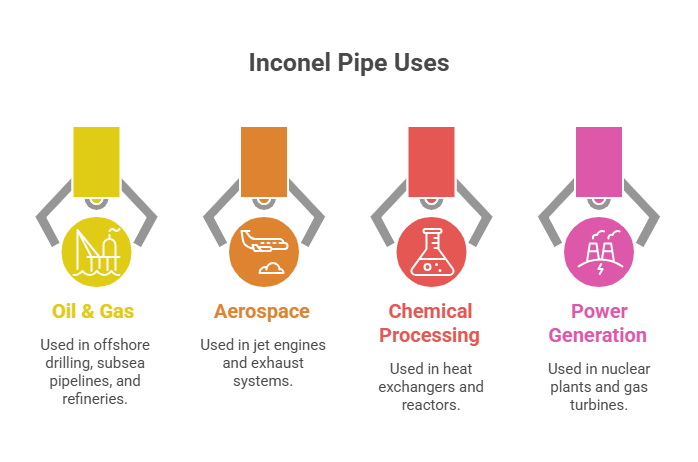
Inconel pipes are widely used across industries:
1. Oil & Gas Industry
- Offshore drilling platforms
- Subsea pipelines
- Refineries and processing units
2. Aerospace Industry
- Jet engines
- Exhaust systems
3. Chemical Processing
- Heat exchangers
- Reactors
4. Power Generation
- Nuclear plants
- Gas turbines
Why Inconel Pipe Is Used in Oil & Gas
Key Reasons
The oil and gas industry operates in some of the harshest environments, making Inconel pipes essential.
Benefits in Oil & Gas
- Resistance to seawater corrosion
- Ability to handle high pressure
- Durability in extreme temperatures
- Reduced maintenance costs
Real-World Advantages
- Prevents pipeline failures
- Improves operational safety
- Ensures long-term reliability
Industry Impact
Using Inconel pipes helps companies reduce downtime and increase efficiency in oil and gas operations.
Inconel Pipe vs Stainless Steel
Key Differences
| Feature | Inconel Pipe | Stainless Steel |
| Heat Resistance | Extremely High | Moderate |
| Corrosion | (Very High) | Good |
| Cost | Expensive | Affordable |
| Strength | Superior | Moderate |
Which One Should You Choose?
- Choose Inconel for extreme conditions
- Choose stainless steel for general applications
Advantages of Inconel Pipes
Top Benefits
- High durability
- Excellent corrosion resistance
- Long lifespan
- Low maintenance
- High performance under stress
Challenges of Using Inconel Pipes
Limitations
- Higher cost compared to other materials
- Difficult machining process
- Requires skilled welding