Selecting the right carbon steel pipe grade is critical for ensuring performance, safety, and long-term reliability in industrial applications. Among the most commonly used specifications, API 5L, ASTM A106, and ASTM A53 stand out as industry standards. However, many procurement engineers and project managers often struggle to understand how these grades differ and where each should be used.
In this guide, we’ll break down the key differences, applications, and selection criteria for these three major carbon steel pipe grades—helping you make an informed and confident decision.
What Are Carbon Steel Pipe Grades?
Carbon steel pipe grades define the chemical composition, mechanical properties, and intended applications of the pipe. These standards ensure consistency, safety, and compatibility across industries.
Why Grades Matter
- Ensure pipes meet pressure and temperature requirements
- Define strength and durability
- Help in selecting the right material for specific applications
- Ensure compliance with industry regulations
Overview of API 5L, ASTM A106 & ASTM A53
API 5L – Pipeline Standard
API 5L pipes are designed specifically for oil and gas transportation systems.
Key Features
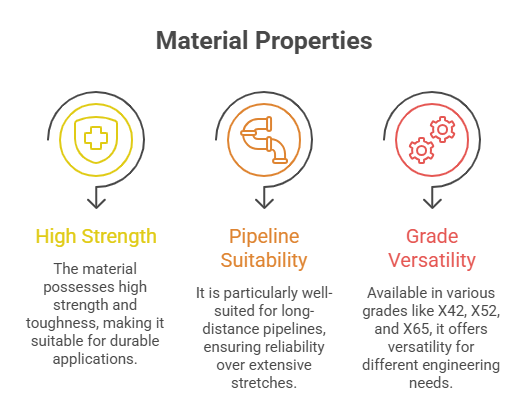
- High strength and toughness
- Suitable for long-distance pipelines
- Available in grades like X42, X52, X65
ASTM A106 – High-Temperature Service
ASTM A106 pipes are seamless pipes used for high-temperature and high-pressure applications.
Key Features
- Excellent heat resistance
- Seamless construction
- Common grades: A, B, C
ASTM A53 – General Purpose Pipes
ASTM A53 pipes are used for mechanical and structural applications.
Key Features
- Available in both seamless and welded forms
- Suitable for low to medium pressure
- Common grades: A, B
API 5L vs ASTM A106 vs A53: Key Differences
1. Primary Application
- API 5L → Oil & gas pipeline
- ASTM A106 → High-temperature services
- ASTM A53 → Structural and general use
2. Manufacturing Type
- API 5L → Seamless and welded
- ASTM A106 → Seamless only
- ASTM A53 → Seamless and welded
3. Strength and Performance
- API 5L → High strength for pipelines
- ASTM A106 → Excellent under high temperature
- ASTM A53 → Moderate strength
4. Pressure Handling
- API 5L → High-pressure transport
- ASTM A106 → High pressure + high temperature
- ASTM A53 → Low to medium pressure
5. Temperature Resistance
- API 5L → Moderate
- ASTM A106 → Excellent
- ASTM A53 → Limited
6. Cost Consideration
- API 5L → Medium to high
- ASTM A106 → Higher due to seamless design
- ASTM A53 → More economical
7. Industry Usage
- API 5L → Oil & gas industry
- ASTM A106 → Power plants, refineries
- ASTM A53 → Construction, mechanical systems
Comparison Table
Feature | API 5L | ASTM A106 | ASTM A53 |
Application | Pipelines | High-temp service | General use |
Type | Seamless/Welded | Seamless only | Seamless/Welded |
Pressure | High | High | Medium |
Temperature | Moderate | High | Low to moderate |
Cost | Medium | High | Low |
When Should You Choose Each Grade?
Choose API 5L When:
- You need pipes for oil and gas pipelines
- High strength and durability are required
Choose ASTM A106 When:
- Operating in high-temperature environments
- Seamless pipes are required for safety
Choose ASTM A53 When:
- Budget is a key concern
- Application is structural or low-pressure
How to Select the Right Pipe Grade
Step-by-Step Selection Guide
Identify Application
Pipeline → API 5L
High temperature → ASTM A106
Structural → ASTM A53Check Pressure Requirements
High → API 5L / A106
Medium → A53Evaluate Temperature Conditions
High heat → A106
Normal → API 5L or A53Consider Budget
Cost-sensitive → A53
Performance-focused → A106
People Also Ask
What is the difference between API 5L and ASTM A106?
API 5L is used for pipelines, while ASTM A106 is designed for high-temperature applications.
Which pipe grade is best for oil and gas?
API 5L is the preferred choice for oil and gas transportation systems.
Is ASTM A53 suitable for high pressure?
It is suitable for low to medium pressure but not ideal for extreme conditions.
Why is ASTM A106 more expensive?
Because it is seamless and designed for high-temperature and high-pressure applications.
Can API 5L pipes be used for structural purposes?
Yes, but they are primarily designed for pipeline applications.
Real-World Use Case
Example Scenario
Project: Oil transportation pipeline
- Requirement: High strength + long-distance durability
- Solution: API 5L Grade X65
Result: Reliable and efficient pipeline performance
Related Reports
- What Is Inconel Pipe? Uses, Grades & Why It’s Used in Oil & Gas
- Types of Stainless Steel Pipes Explained: Seamless, Welded, Duplex & Super Duplex
- Inconel vs Stainless Steel Pipe: Which Should You Choose for High-Temp Applications?
Conclusion
Understanding the differences between API 5L, ASTM A106, and ASTM A53 is essential for selecting the right carbon steel pipe grade.
Final Takeaways
- API 5L → Best for pipelines
- ASTM A106 → Best for high temperature and pressure
- ASTM A53 → Best for general and structural use
Procurement Insight
Choosing the correct grade ensures safety, efficiency, and cost optimization, making it a crucial factor in project success.