Types of stainless steel pipes explained is a crucial topic for industries that rely on durable and corrosion-resistant piping solutions. Stainless steel pipes are widely used in construction, oil & gas, chemical processing, and water systems due to their strength and longevity. If you want to understand seamless, welded, duplex & super duplex stainless steel pipes, this guide will help you choose the right type for your application. For global standards, you can refer to https://metallonpipings.ae/ (official stainless steel organization).
What Are Stainless Steel Pipes?
Stainless steel pipes are tubular products made from iron alloys containing chromium, which enhances corrosion resistance.
Key Features
- High corrosion resistance
- Strong and durable
- Heat-resistant
- Low maintenance

Main Types of Stainless Steel Pipes
1. Seamless Stainless Steel Pipes
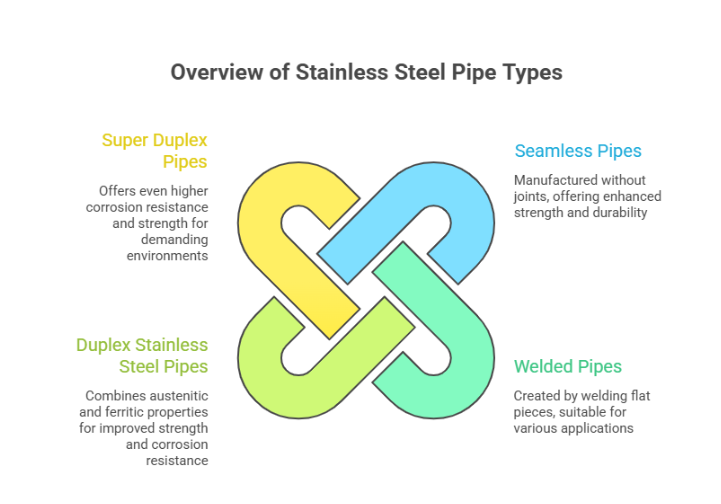
Seamless pipes are manufactured without any welding joints.
Key Characteristics
- Uniform structure
- High strength
- No weak points
- Suitable for high pressure
Applications
- Oil & gas pipelines
- Power plants
- Boilers
2. Welded Stainless Steel Pipes
Welded pipes are made by rolling steel sheets and welding them.
Key Characteristics
- Cost-effective
- Available in large sizes
- Smooth surface finish
Applications
- Water pipelines
- Construction
- Food processing industries
3. Duplex Stainless Steel Pipes
Duplex pipes combine austenitic and ferritic stainless steel properties.
Key Characteristics
- High strength
- Excellent corrosion resistance
- Better stress corrosion cracking resistance
Applications
- Marine environments
- Chemical processing
- Oil & gas industries
4. Super Duplex Stainless Steel Pipes
Super duplex pipes offer enhanced properties compared to duplex.
Key Characteristics
- Superior corrosion resistance
- Extremely high strength
- Long service life
Applications
- Offshore oil rigs
- Desalination plants
- Harsh chemical environments
Seamless vs Welded Pipes
Key Differences
| Feature | Seamless Pipe | Welded Pipe |
| Manufacturing | No welding | Welded joint |
| Strength | Higher | Moderate |
| Cost | Expensive | Affordable |
| Applications | High pressure | General use |
Duplex vs Super Duplex Pipes
Comparison Overview
| Feature | Duplex Steel | Super Duplex Steel |
| Strength | High | Very High |
| Corrosion Resistance | Excellent | Superior |
| Cost | Moderate | Higher |
| Usage | Industrial | Extreme environments |
Advantages of Stainless Steel Pipes
Top Benefits
- Long lifespan
- Corrosion resistance
- Eco-friendly material
- Low maintenance
- Versatile applications
How to Choose the Right Type of Stainless Steel Pipe
Step-by-Step Guide
- Identify Application
- High pressure → Seamless
- General use → Welded
- Check Environment
- Marine/chemical → Duplex or Super Duplex
- Evaluate Budget
- Limited budget → Welded
- High performance → Duplex/Super Duplex
- Consider Strength Requirements
- Extreme conditions → Super Duplex
Common Industries Using Stainless Steel Pipes
Key Sectors
- Oil & gas
- Construction
- Food & beverage
- Chemical processing
- Marine engineering