Selecting the right high-performance alloy pipe is one of the most important decisions in industries such as oil & gas, petrochemical processing, marine engineering, chemical manufacturing, offshore drilling, and power generation. In highly corrosive environments, standard stainless steel materials often fail due to chemical exposure, extreme temperatures, chloride attack, oxidation, and stress corrosion cracking.
This is where nickel-based superalloys such as Hastelloy C276 and Inconel 625 become critical. Both alloys are widely used in harsh industrial environments because they provide exceptional corrosion resistance, high-temperature stability, mechanical strength, and long service life.
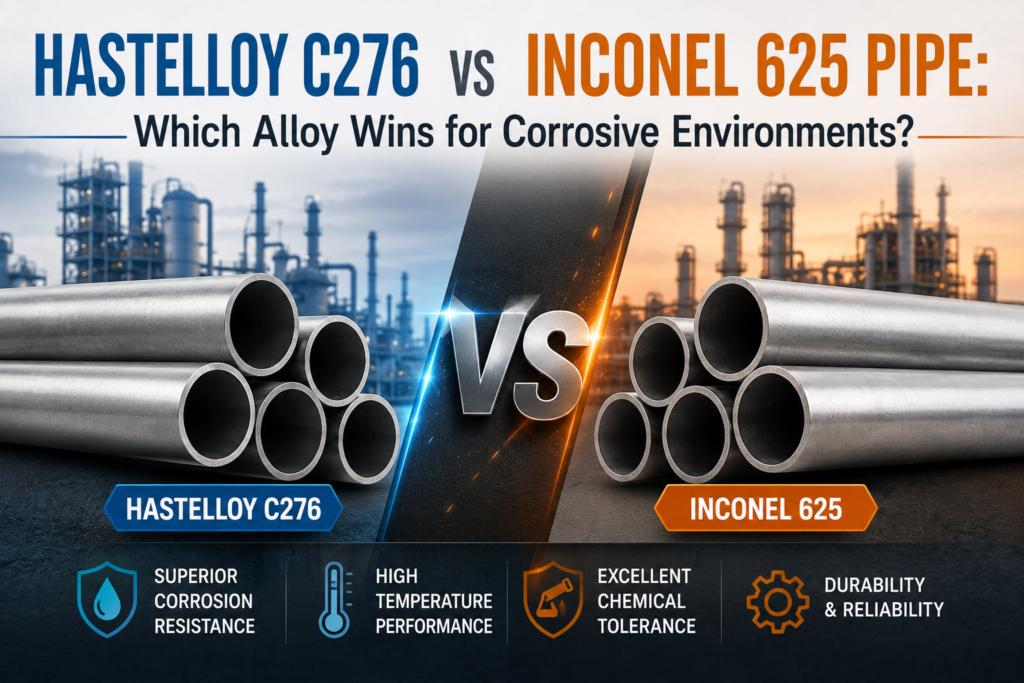
However, many engineers, procurement managers, and industrial buyers often ask an important question: Which alloy performs better in corrosive environments — Hastelloy C276 or Inconel 625?
The answer depends on the application, chemical exposure, operating temperature, pressure conditions, and long-term performance requirements.
This guide explains the key differences, advantages, applications, and selection factors for Hastelloy C276 and Inconel 625 pipes.
What Is Hastelloy C276?
Hastelloy C276 is a nickel-molybdenum-chromium alloy known for its outstanding resistance to aggressive chemicals and highly corrosive environments.
The alloy is especially effective against:
- Strong acids
- Chlorides
- Oxidizing chemicals
- Reducing environments
- Pitting corrosion
- Crevice corrosion
Hastelloy C276 is widely used in industries where chemical resistance is more important than extreme mechanical strength.
Key Properties of Hastelloy C276
- Excellent corrosion resistance
- High molybdenum content
- Strong resistance to pitting and crevice corrosion
- Good weldability
- Resistance to wet chlorine gas
- Effective in acidic processing systems
Its versatility makes it one of the most trusted corrosion-resistant alloys globally.
What Is Inconel 625?
Inconel 625 is a nickel-chromium-molybdenum alloy designed for both high corrosion resistance and exceptional mechanical strength at elevated temperatures.
It performs extremely well in:
- High-temperature applications
- Marine environments
- Offshore systems
- Aerospace systems
- High-pressure industrial environments
Inconel 625 combines oxidation resistance with superior structural strength.
Key Properties of Inconel 625
- Excellent high-temperature performance
- Strong oxidation resistance
- High tensile strength
- Outstanding fatigue resistance
- Excellent weldability
- Resistance to seawater corrosion
Because of its strength and durability, Inconel 625 is commonly used in extreme industrial operations.
Chemical Composition Comparison
Hastelloy C276 Composition
Hastelloy C276 primarily contains:
- Nickel
- Molybdenum
- Chromium
- Iron
- Tungsten
Its high molybdenum content significantly improves corrosion resistance.
Inconel 625 Composition
Inconel 625 mainly contains:
- Nickel
- Chromium
- Molybdenum
- Niobium
Niobium strengthens the alloy and improves high-temperature performance.
Corrosion Resistance Comparison
Hastelloy C276: Superior Chemical Resistance
When it comes to highly aggressive chemical environments, Hastelloy C276 often performs better.
It offers exceptional resistance against:
- Sulfuric acid
- Hydrochloric acid
- Chlorine compounds
- Acidic chemical processing systems
- Wet corrosive environments
Hastelloy C276 is particularly effective in mixed chemical exposure environments where multiple corrosive agents are present simultaneously.
Best Applications for Hastelloy C276
- Chemical processing plants
- Acid manufacturing systems
- Waste treatment plants
- Flue gas desulfurization systems
- Chlorine processing facilities
For severe chemical corrosion, Hastelloy C276 is usually the preferred choice.
Inconel 625: Strong Marine and Oxidation Resistance
Inconel 625 performs exceptionally well in:
- Saltwater environments
- Marine applications
- Offshore oil platforms
- High-temperature oxidizing systems
Its resistance to seawater corrosion makes it ideal for offshore and marine engineering projects.
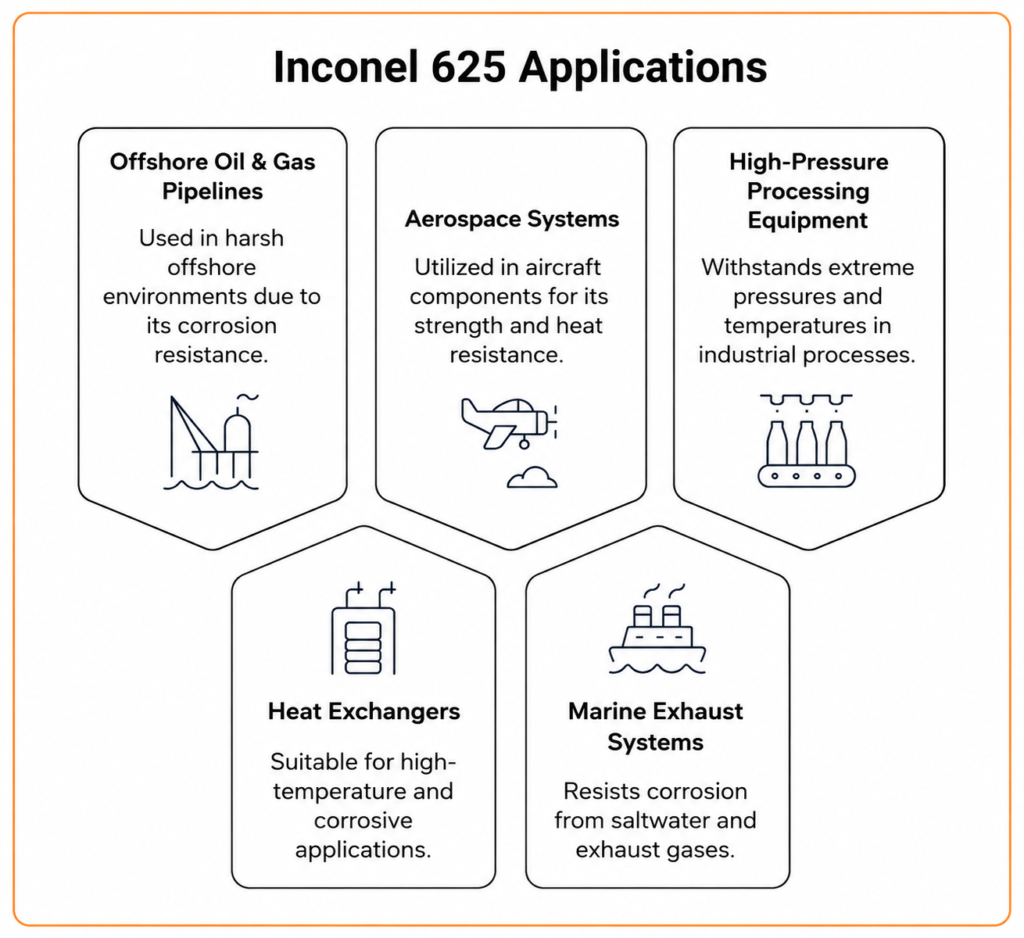
Best Applications for Inconel 625
- Offshore oil & gas pipelines
- Heat exchangers
- Aerospace systems
- Marine exhaust systems
- High-pressure processing equipment
Inconel 625 performs especially well where both strength and corrosion resistance are required together.
High-Temperature Performance
Inconel 625 Has Better Heat Resistance
Inconel 625 generally outperforms Hastelloy C276 in extremely high-temperature applications.
It maintains:
- Structural integrity
- Mechanical strength
- Oxidation resistance
- Fatigue resistance
Even under elevated temperatures and thermal cycling conditions.
This makes Inconel 625 ideal for:
- Turbine systems
- Aerospace components
- Exhaust systems
- High-temperature pressure systems
Hastelloy C276 Performs Well but Prioritizes Corrosion
While Hastelloy C276 also performs under high temperatures, its primary strength lies in corrosion protection rather than extreme thermal strength.
Mechanical Strength Comparison
Inconel 625 Offers Higher Strength
Inconel 625 provides:
- Higher tensile strength
- Better fatigue resistance
- Stronger creep resistance
- Better structural durability
This makes it suitable for high-pressure and mechanically demanding environments.
Hastelloy C276 Focuses More on Corrosion Protection
Hastelloy C276 offers strong durability but is typically selected more for corrosion resistance than maximum mechanical performance.
Weldability and Fabrication
Both alloys offer good weldability compared to many high-performance metals.
Hastelloy C276 Advantages
- Easier fabrication in chemical systems
- Good resistance after welding
- Reduced risk of weld corrosion
Inconel 625 Advantages
- Excellent weld strength
- High structural integrity after welding
- Suitable for demanding offshore systems
Proper welding procedures remain essential for both materials.
Cost Comparison
Hastelloy C276
Generally more expensive in applications requiring extreme chemical resistance because of its specialized corrosion-resistant properties.
Inconel 625
Often costly due to high nickel content and superior mechanical properties.
Pricing depends on:
- Pipe dimensions
- Market nickel prices
- Manufacturing specifications
- Project requirements
Both alloys are premium industrial materials.
Which Alloy Wins for Corrosive Environments?
The answer depends on the environment.
Choose Hastelloy C276 If:
- Chemical corrosion is the biggest concern
- The system handles aggressive acids
- Chloride exposure is severe
- Corrosion resistance is more important than strength
Choose Inconel 625 If:
- High temperatures are involved
- Offshore or marine exposure exists
- High mechanical strength is required
- Oxidation resistance is critical
There is no universal winner because both alloys are optimized for different industrial challenges.
Industries Using Hastelloy C276 and Inconel 625
Industries Using Hastelloy C276
- Chemical processing
- Pollution control
- Pharmaceutical manufacturing
- Waste treatment
- Petrochemical plants
Industries Using Inconel 625
- Offshore oil & gas
- Marine engineering
- Aerospace
- Power generation
- Nuclear industries
Both alloys remain essential in mission-critical industrial operations.
Common Selection Factors for Engineers
Before selecting either alloy, engineers evaluate:
- Operating temperature
- Chemical exposure
- Pressure conditions
- Corrosion risks
- Mechanical stress
- Fabrication requirements
- Maintenance expectations
- Budget considerations
Proper material selection improves safety, reliability, and long-term operational performance.
Importance of Material Selection in Oil & Gas
Oil & gas projects in GCC and African regions often operate in:
- High salinity conditions
- Offshore environments
- Acidic processing systems
- High-pressure operations
- Extreme temperatures
Using the wrong alloy can lead to:
- Corrosion failures
- Costly downtime
- Safety risks
- Expensive maintenance
This is why alloy selection is critical for industrial reliability.
Future Demand for High Nickel Alloys
As industries continue expanding into harsher operating environments, demand for advanced nickel alloys continues growing.
Future trends include:
- Deeper offshore drilling
- Hydrogen processing systems
- LNG infrastructure
- Advanced chemical processing
- High-temperature energy systems
High-performance alloys such as Hastelloy C276 and Inconel 625 will remain essential for industrial growth.
Conclusion
Both Inconel 625 and Hastelloy C276 are outstanding nickel-based alloys suited for harsh industrial settings. While Inconel 625 provides exceptional mechanical strength, maritime endurance, and high-temperature performance, Hastelloy C276 is well known for its exceptional resistance to harsh chemical corrosion. The ideal option is entirely dependent on the project’s mechanical requirements, temperature conditions, corrosion exposure, and operational environment. Choosing the appropriate alloy pipe is essential for long-term dependability, operational safety, and economical performance in sectors that operate in highly corrosive, high-pressure, or extremely hot conditions.
How We Support You
Selecting the right high nickel alloy pipe is essential for ensuring corrosion resistance, high-temperature strength, and long-term reliability in aggressive industrial environments. Our team helps EPC contractors, procurement engineers, and project consultants choose the most suitable alloy solutions, including Hastelloy C276 and Inconel 625 pipes, based on chemical exposure, operating temperatures, pressure conditions, and project specifications across GCC and African industries.
We support you with:
- Guidance in selecting the right alloy pipe for corrosive chemical processing, offshore, marine, and oil & gas applications
- Recommendations for Hastelloy C276 and Inconel 625 pipes based on corrosion resistance, mechanical strength, and temperature performance
- Support for applications involving acids, chlorides, seawater, sour gas, and high-pressure process systems
- Assistance with compliance to ASTM, ASME, NACE, API, ARAMCO, and international EPC specifications
- Guidance for seamless, welded, ERW, and custom high nickel alloy pipe solutions
- Recommendations for offshore platforms, desalination plants, heat exchangers, chemical plants, and subsea pipeline systems
- Technical support for pipe schedules, wall thickness selection, fittings, flanges, and corrosion-resistant coatings
- Documentation support including MTCs, PMI reports, hydro testing, third-party inspection, and quality certifications
- Fast quotations, export logistics, and bulk supply support for GCC & African industrial projects
Whether your project involves chemical processing facilities, offshore pipelines, marine systems, power plants, desalination units, or high-corrosion industrial environments, we provide reliable Hastelloy C276 and Inconel 625 pipe solutions tailored to meet performance, durability, and international project compliance requirements.