Some of the biggest oil, gas, petrochemical, and industrial developments in the world are found in Saudi Arabia, where industry titans like Saudi ARAMCO and SABIC are in charge. Industrial plumbing systems that satisfy strict international requirements for quality, safety, and long-term dependability are required for these projects. Making the correct supplier choice is essential to guaranteeing project success, reducing downtime, and upholding project criteria.
Manufacturers and exporters must adhere to stringent material specifications, certification standards, and delivery schedules whether they are selling seamless pipes, welded pipes, stainless steel pipes, alloy steel pipes, or high nickel alloy materials. The main factors to be taken into account while purchasing industrial pipes for Saudi ARAMCO and SABIC projects are explained in this article.
Understanding the Requirements of Saudi ARAMCO and SABIC Projects
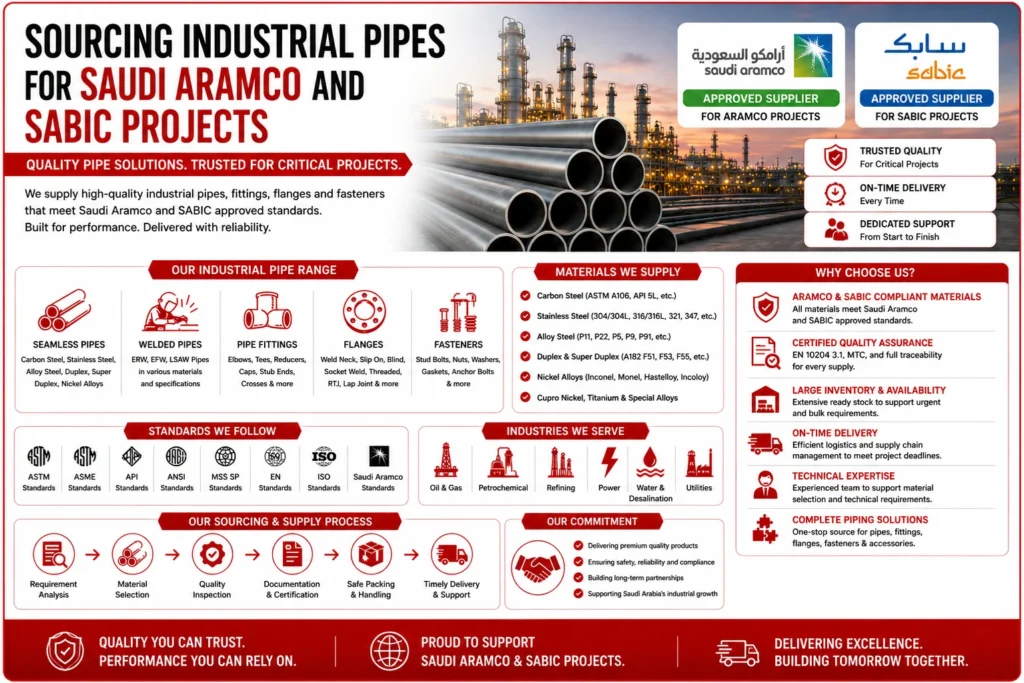
Industrial facilities operated by Saudi ARAMCO and SABIC function in demanding environments involving high pressure, elevated temperatures, corrosive chemicals, and continuous operation. As a result, piping materials must deliver exceptional mechanical strength, corrosion resistance, and durability.
Projects typically require compliance with internationally recognized standards such as:
- ASTM material
- specifications
- ASME piping standards
- API specifications
- MSS standards
- ISO quality management systems
- NACE requirements for corrosion resistance where applicable
In addition to technical compliance, suppliers are expected to provide complete material traceability, inspection reports, and quality documentation throughout the supply chain.
Types of Industrial Pipes Commonly Used
Different industrial applications require different pipe materials depending on operating conditions.
Carbon Steel Pipes
Carbon steel pipes are widely used for transporting oil, gas, steam, and water. They provide excellent strength and cost-effectiveness for general industrial applications.
Typical applications include:
- Oil transmission pipelines
- Water distribution systems
- Fire protection systems
- Structural applications
Stainless Steel Pipes
Stainless steel pipes are preferred where corrosion resistance and hygiene are essential.
Common industries include:
- Petrochemical plants
- Chemical processing
- Food processing
- Pharmaceutical manufacturing
- Desalination facilities
Popular grades include:
- SS 304
- SS 304L
- SS 316
- SS 316L
- SS 904L
Alloy Steel Pipes
Alloy steel pipes offer improved high-temperature strength and pressure resistance.
These materials are commonly used in:
- Refineries
- Power plants
- Heat exchangers
- Boilers
- High-pressure process piping
Frequently specified grades include:
- ASTM A335 P5
- ASTM A335 P9
- ASTM A335 P11
- ASTM A335 P22
- ASTM A335 P91
Duplex and Super Duplex Pipes
These materials provide outstanding resistance to chloride corrosion and stress corrosion cracking, making them ideal for offshore and marine applications.
Typical applications include:
- Offshore platforms
- Seawater systems
- Desalination plants
- Marine pipelines
High Nickel Alloy Pipes
Nickel alloys are selected for extremely aggressive operating environments.
Common materials include:
- Inconel
- Monel
- Hastelloy
- Incoloy
These alloys perform exceptionally well in:
- Sour gas service
- Chemical processing
- Offshore production
- High-temperature applications
Importance of Material Certification
One of the most important requirements for Saudi ARAMCO and SABIC projects is complete documentation.
Reliable suppliers should provide:
- Mill Test Certificates (MTC)
- Material traceability reports
- Heat number identification
- Chemical composition reports
- Mechanical test reports
- Hydrostatic test certificates
- Non-destructive testing (NDT) reports
- Third-party inspection certificates where required
Proper documentation simplifies project approvals and ensures compliance with customer specifications.
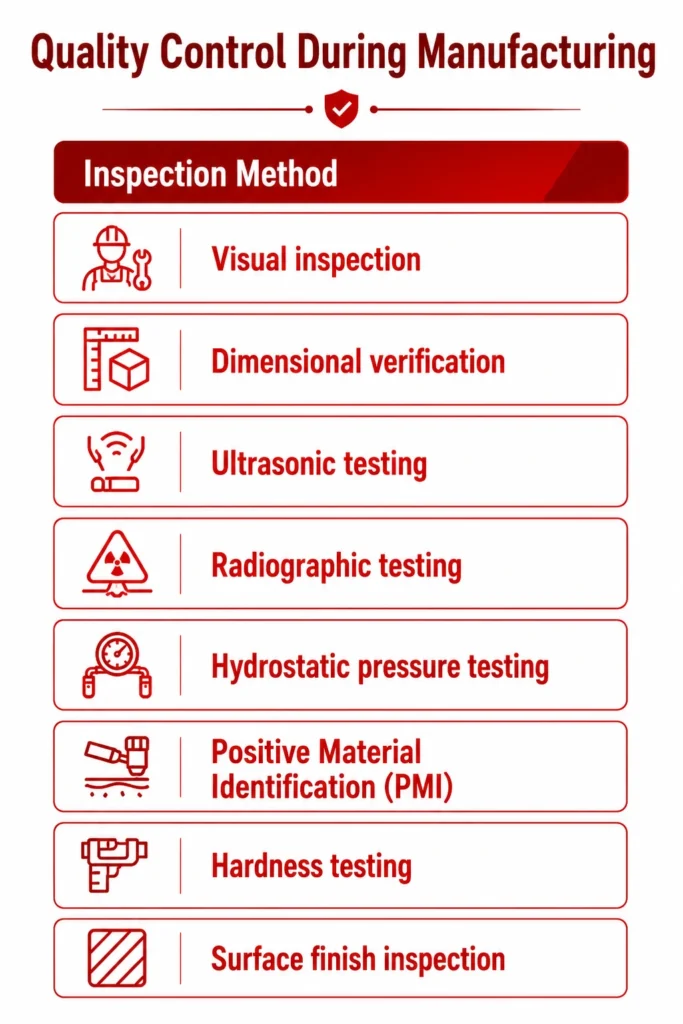
Quality Control During Manufacturing
Industrial pipes must undergo rigorous inspection before shipment.
Typical quality checks include:
- Visual inspection
- Dimensional verification
- Ultrasonic testing
- Radiographic testing
- Hydrostatic pressure testing
- Positive Material Identification (PMI)
- Hardness testing
- Surface finish inspection
Consistent quality control reduces installation issues and improves long-term performance.
Choosing the Right Pipe Supplier
Selecting the right supplier involves much more than comparing prices.
Consider the following factors before placing an order:
Manufacturing Quality
Choose suppliers with proven manufacturing capabilities and strict quality assurance procedures.
International Standards Compliance
Ensure products comply with applicable ASTM, ASME, API, and project-specific standards.
Product Availability
A supplier with a broad inventory can reduce procurement time and support urgent project requirements.
Export Experience
Suppliers experienced in exporting to Saudi Arabia understand documentation requirements, packaging standards, and customs procedures.
Technical Support
Experienced suppliers can assist with material selection based on temperature, pressure, corrosion resistance, and application requirements.
Delivery Performance
Timely delivery is essential for large industrial projects where construction schedules depend on material availability.
Packaging and Logistics
Proper packaging is essential to prevent damage during international transportation.
Industrial pipes are typically protected using:
- End caps
- Waterproof wrapping
- Wooden crates
- Steel bundles
- Export-grade packaging
- Clear product identification labels
Reliable logistics planning helps ensure materials arrive safely and on schedule.
Industries That Depend on High-Quality Industrial Pipes
Saudi ARAMCO and SABIC projects support a wide range of industrial sectors that rely on premium piping materials, including:
- Oil and gas production
- Petrochemical processing
- Refineries
- LNG facilities
- Fertilizer plants
- Power generation
- Water treatment
- Desalination plants
- Offshore platforms
- Marine infrastructure
Each industry has unique operating conditions that influence material selection and piping specifications.
Common Challenges When Sourcing Industrial Pipes
Procurement teams often encounter several challenges when sourcing industrial piping materials.
These include:
- Long manufacturing lead times
- Material shortages
- Counterfeit certifications
- Inconsistent product quality
- Shipping delays
- Documentation errors
- Project specification changes
Working with an experienced and reputable supplier helps minimize these risks and ensures smooth project execution.
Why Reliable Suppliers Matter
There is much more to a reliable industrial pipe supplier than just product delivery. Throughout the course of a project, trustworthy partners offer technical know-how, reliable logistics assistance, consistent quality, and appropriate documentation.
Additionally, they guarantee that products fulfill strict project specifications, provide prompt customer support, and uphold robust quality management systems. These elements assist contractors in lowering installation hazards, avoiding expensive delays, and increasing project efficiency.
Conclusion
Quality, compliance, and supplier dependability must be carefully considered while sourcing industrial pipes for Saudi ARAMCO and SABIC projects. Choosing the appropriate material is crucial for guaranteeing safe and effective operation in challenging industrial conditions, from carbon steel and stainless steel to alloy steel, duplex, and high nickel alloys.
Project owners and contractors can confidently meet the high standards required throughout Saudi Arabia’s energy, petrochemical, and infrastructure sectors by working with an experienced supplier that provides certified products, strict quality control, comprehensive documentation, and on-time delivery. Purchasing high-quality piping solutions improves the long-term performance and dependability of vital industrial systems in addition to supporting regulatory compliance.
How We Support You
Supplying industrial pipes for Saudi ARAMCO and SABIC projects requires strict compliance with international standards, approved material specifications, and dependable delivery schedules. Our team supports EPC contractors, procurement specialists, project consultants, and industrial buyers in sourcing high-quality piping solutions that meet the demanding requirements of oil & gas, petrochemical, refinery, and industrial infrastructure projects across Saudi Arabia.
We support you with:
- Guidance in sourcing carbon steel, stainless steel, alloy steel, duplex, super duplex, and high nickel alloy pipes for Saudi ARAMCO and SABIC projects
- Recommendations based on operating pressure, temperature, corrosion resistance, process conditions, and project-specific material specifications
- Support for pipelines, refineries, petrochemical plants, gas processing facilities, power plants, desalination projects, and industrial utility systems
- Assistance in selecting compliant pipes, fittings, flanges, valves, and related piping components for complete project requirements
- Guidance on compliance with Saudi ARAMCO standards, SABIC specifications, ASTM, ASME, API, NACE, ISO, and international EPC project requirements
- Support for material traceability, approved manufacturer sourcing, and quality assurance throughout the procurement process
- Documentation support including Mill Test Certificates (MTCs), third-party inspection reports, PMI reports, hydrostatic test certificates, and quality certifications
- Assistance with project documentation, export packaging, customs documentation, logistics coordination, and on-time delivery to Saudi Arabia
- Fast quotations, bulk procurement support, and reliable supply chain solutions for large-scale industrial and energy projects
- Technical assistance for material selection, pipe schedules, wall thickness requirements, welding compatibility, and project-specific engineering needs
Whether your project involves Saudi ARAMCO, SABIC, refinery expansions, petrochemical facilities, offshore developments, or industrial infrastructure, we provide dependable industrial piping solutions that meet stringent quality standards, ensure regulatory compliance, and support successful project execution.