Desalination projects, marine infrastructure, and offshore oil and gas extraction all rely on subsea pipelines. With regular exposure to seawater, high pressure, fluctuating temperatures, and corrosive chemicals, these pipelines function in one of the most hostile environments on the planet. Pipeline failures without adequate corrosion protection can lead to expensive repairs, harm to the environment, and lost productivity.
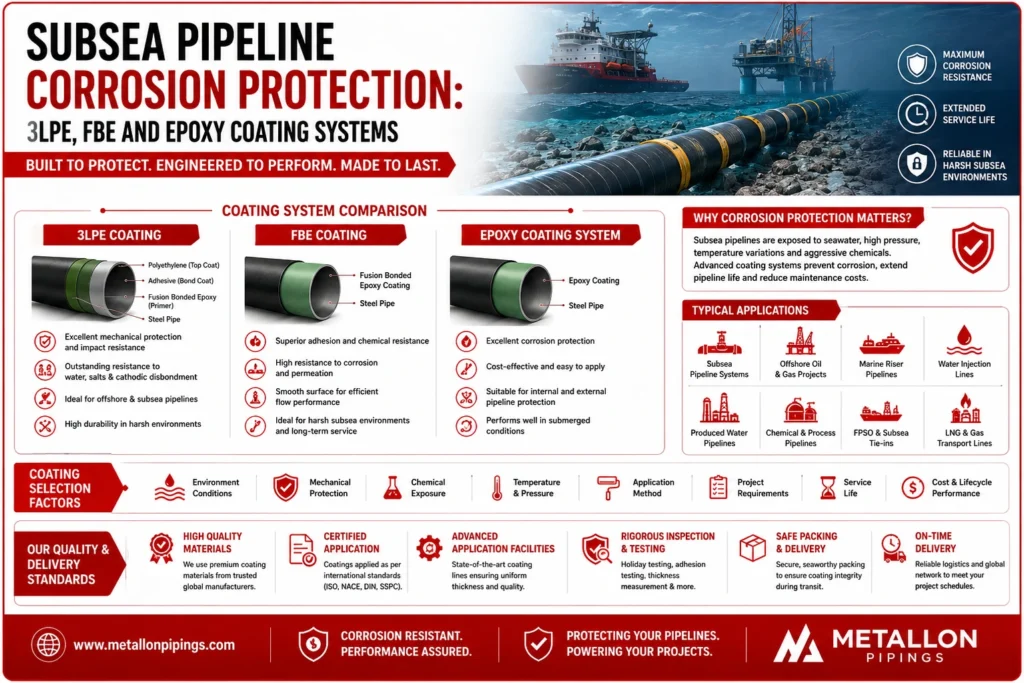
Industries depend on cutting-edge exterior coating solutions like Fusion Bonded Epoxy (FBE), Three-Layer Polyethylene (3LPE), and liquid epoxy coatings to extend service life and guarantee dependable operation. Depending on the needs of the project, the installation technique, and the operational environment, each coating system offers a varied degree of protection.
In this guide, we’ll explore how these coating systems work, their advantages, applications, and how to choose the right solution for subsea pipeline projects.
Why Corrosion Protection Is Critical for Subsea Pipelines
Unlike onshore pipelines, subsea pipelines remain permanently immersed in seawater, making them highly vulnerable to corrosion. Factors that contribute to pipeline degradation include:
- Continuous exposure to saltwater
- Dissolved oxygen and chlorides
- Marine microorganisms
- Mechanical damage during installation
- Abrasion from seabed movement
- High-pressure operating conditions
If left unprotected, corrosion can reduce wall thickness, weaken structural integrity, and eventually lead to leaks or complete pipeline failure.
Modern offshore projects therefore combine protective coatings, cathodic protection, and high-performance alloy materials to extend pipeline life well beyond 25–40 years.
What Is Fusion Bonded Epoxy (FBE) Coating?
One of the most popular anti-corrosion coatings for steel pipelines is Fusion Bonded Epoxy (FBE). Epoxy powder is electrostatically applied to heated steel surfaces during the production process, when it melts and forms a chemical bond with the pipe.
The end product is a covering that efficiently resists corrosion and is uniform, hard, and very sticky.
Key Features of FBE Coating
- Excellent adhesion to steel
- High corrosion resistance
- Good chemical resistance
- Smooth coating finish
- Suitable for cathodic protection systems
- Excellent long-term durability
FBE coatings are commonly used for:
- Offshore transmission pipelines
- Water injection lines
- Gas gathering pipelines
- Oil transportation systems
- Process pipelines
Understanding 3LPE Coating Systems
Three-Layer Polyethylene (3LPE) coating is considered one of the most robust external pipeline protection systems available today.
As the name suggests, the coating consists of three individual layers that work together.
Layer 1 – Fusion Bonded Epoxy (FBE)
The first layer bonds directly to the steel surface and provides excellent corrosion protection.
Layer 2 – Adhesive Layer
A copolymer adhesive chemically bonds the FBE layer to the polyethylene outer layer.
Layer 3 – Polyethylene Outer Layer
The final polyethylene layer provides:
- Mechanical protection
- Impact resistance
- Abrasion resistance
- Moisture barrier
- Chemical protection
The combination creates a highly durable coating system capable of withstanding harsh subsea environments.
Advantages of 3LPE Coating
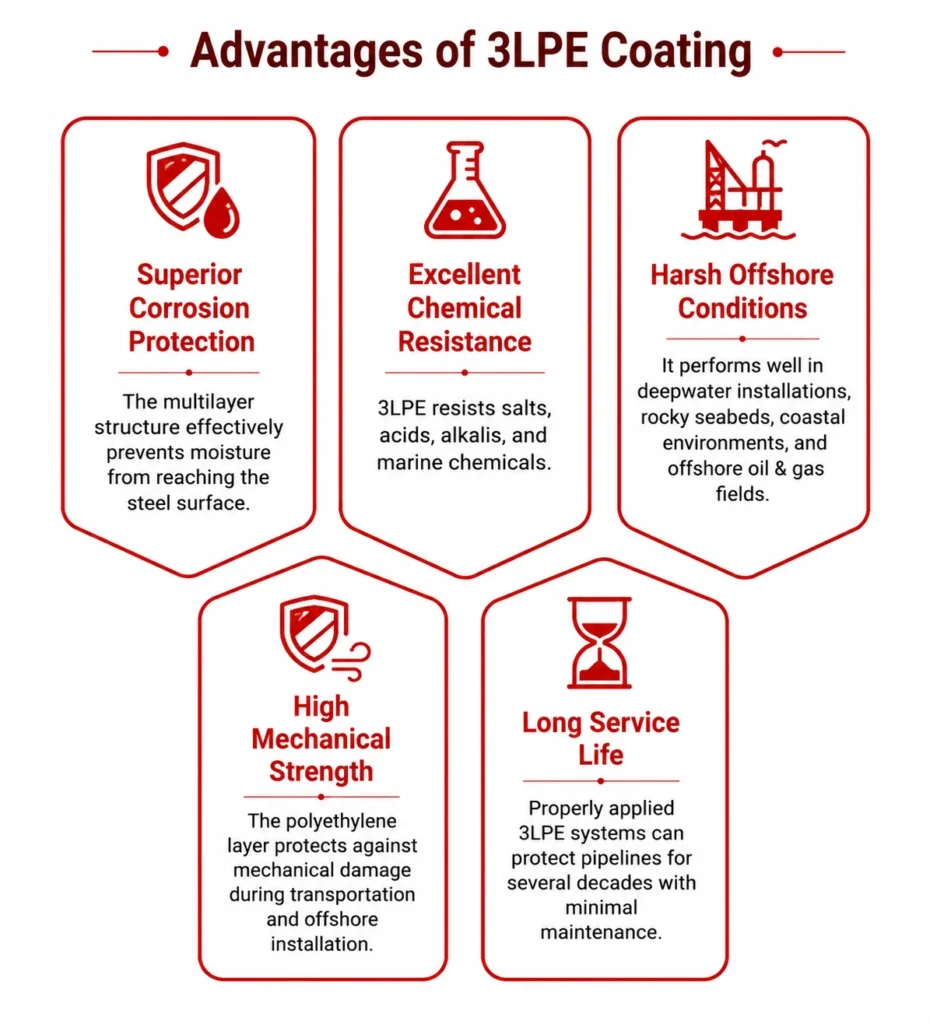
3LPE coating has become the preferred choice for long-distance offshore pipelines because it offers several benefits.
Superior Corrosion Protection
The multilayer structure effectively prevents moisture from reaching the steel surface.
High Mechanical Strength
During transportation and offshore installation, pipelines often experience impacts and abrasion. The polyethylene layer protects against mechanical damage.
Excellent Chemical Resistance
3LPE resists:
- Salts
- Acids
- Alkalis
- Marine chemicals
Long Service Life
Properly applied 3LPE systems can protect pipelines for several decades with minimal maintenance.
Suitable for Harsh Offshore Conditions
It performs well in:
- Deepwater installations
- Rocky seabeds
- Coastal environments
- Offshore oil & gas fields
Liquid Epoxy Coating Systems
Another popular corrosion prevention option for subsea applications is liquid epoxy coatings. Liquid epoxy is applied with rollers or spray equipment, in contrast to powder-based FBE.
When these coatings cure, they cover steel surfaces with a smooth, protective layer.
Benefits of Liquid Epoxy Coatings
- Easy field application
- Excellent adhesion
- Strong chemical resistance
- Smooth surface finish
- Ideal for repairs and maintenance
- Compatible with existing coating systems
Liquid epoxy coatings are commonly used for:
- Pipeline joints
- Offshore platform structures
- Valves
- Fittings
- Repair areas
- Weld zones
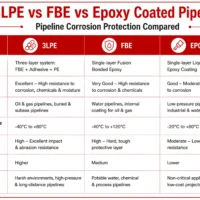
Comparing FBE, 3LPE and Epoxy Coating Systems
Feature | FBE | 3LPE | Liquid Epoxy |
Corrosion Protection | Excellent | Outstanding | Excellent |
Mechanical Protection | Moderate | Excellent | Moderate |
Abrasion Resistance | Good | Excellent | Good |
Chemical Resistance | Excellent | Excellent | Excellent |
Installation | Factory Applied | Factory Applied | Field or Factory Applied |
Repair Capability | Limited | Limited | Excellent |
Typical Service Life | 20–30 Years | 30–40+ Years | 15–25 Years |
Each system serves a different purpose, and many offshore projects use them together to achieve complete protection.
How Cathodic Protection Works with Coatings
For long-term subsea service, protective coatings by themselves are rarely adequate.
Cathodic Protection (CP) systems and coatings are combined in the majority of offshore pipelines.
While cathodic protection protects against minor flaws, scratches, or vacations that can arise during installation or operation, the coating reduces the amount of exposed steel surface.
Together they provide:
- Longer pipeline lifespan
- Lower maintenance costs
- Reduced corrosion rates
- Improved operational reliability
Applications of Subsea Pipeline Coating Systems
These protective coatings are widely used across multiple industries.
Offshore Oil & Gas
- Export pipelines
- Flowlines
- Gathering systems
- Production pipelines
Desalination Plants
Marine intake and outfall pipelines require excellent corrosion resistance against seawater.
LNG Projects
Cryogenic gas transportation systems often use coated steel pipelines for enhanced durability.
Marine Infrastructure
- Harbour pipelines
- Underwater water supply lines
- Cooling water systems
- Industrial seawater pipelines
Renewable Energy
Offshore wind farms increasingly utilize coated subsea pipelines and support structures for long-term protection.
Choosing the Right Coating System
Selecting the ideal corrosion protection system depends on several project factors, including:
- Pipeline diameter
- Operating temperature
- Water depth
- Installation method
- Mechanical loading
- Soil conditions
- Design life
- Environmental exposure
3LPE is frequently the recommended option for pipelines that need the highest level of mechanical protection and long-term durability.
FBE offers good adhesion and dependable corrosion resistance for conventional transmission pipelines.
Liquid epoxy coatings are flexible and simple to apply for field repairs, weld joints, and maintenance tasks.
The best coating system for each project is chosen with the aid of a thorough engineering evaluation.
Best Practices for Long-Term Pipeline Protection
To maximize the lifespan of subsea pipelines, operators should follow these practices:
- Select the appropriate coating system based on service conditions.
- Ensure proper surface preparation before coating application.
- Perform coating thickness and adhesion testing.
- Inspect coatings during transportation and installation.
- Integrate cathodic protection with external coatings.
- Conduct regular subsea inspections and maintenance.
- Repair coating damage promptly using approved repair materials.
Following these measures significantly reduces corrosion risks and enhances pipeline reliability.
Conclusion
Effective corrosion prevention is crucial for the safe and dependable operation of subsea pipes since they are constantly exposed to corrosive marine conditions. Liquid epoxy coatings are perfect for maintenance, repairs, and joints; 3LPE offers improved mechanical and environmental protection for harsh offshore environments; and Fusion Bonded Epoxy (FBE) gives exceptional adhesion and corrosion resistance.
The project’s operating conditions, installation specifications, and anticipated service life all play a role in choosing the best coating solution. These coating technologies can prolong pipeline life, save maintenance costs, and enhance overall operational safety when paired with appropriate surface preparation, high-quality application, and cathodic protection.
For offshore oil and gas, desalination, maritime infrastructure, and other subsea pipeline applications, investing in proven corrosion protection technologies is essential to guaranteeing long-term performance.
How We Support You
Selecting the right pipeline coating system is essential for protecting subsea pipelines against corrosion, mechanical damage, and harsh offshore environments. Our team helps EPC contractors, offshore engineers, pipeline operators, procurement specialists, and project consultants choose the most suitable corrosion protection solutions for offshore oil & gas, marine, and subsea infrastructure projects across the GCC, Africa, and international markets.
We support you with:
- Guidance in selecting suitable coating systems including 3LPE (Three-Layer Polyethylene), FBE (Fusion Bonded Epoxy), and liquid epoxy coatings based on project requirements
- Recommendations based on water depth, operating temperature, pipeline diameter, soil conditions, mechanical protection, and corrosion resistance requirements
- Support for subsea pipelines, offshore transmission lines, risers, flowlines, export pipelines, and underwater utility infrastructure
- Assistance in selecting coated carbon steel, alloy steel, and stainless steel pipes for offshore and marine applications
- Guidance on compliance with ISO, ASTM, API, NACE, DNV, and international offshore project specifications
- Recommendations for external corrosion protection, abrasion resistance, cathodic protection compatibility, and long-term pipeline durability
- Technical support for coating thickness selection, field joint coating systems, inspection procedures, and quality control requirements
- Documentation support including coating inspection reports, holiday test reports, adhesion test results, Mill Test Certificates (MTCs), and third-party inspection certificates
- Fast quotations, export logistics, and bulk supply support for offshore, subsea, marine, and energy infrastructure projects across the GCC and African markets
- Assistance in sourcing coated pipes, fittings, flanges, and related pipeline components for complete subsea piping systems
Whether your project involves offshore oil & gas developments, subsea transmission pipelines, marine infrastructure, or underwater utility systems, we provide reliable pipeline coating solutions that deliver superior corrosion protection, long-term performance, and compliance with international industry standards.